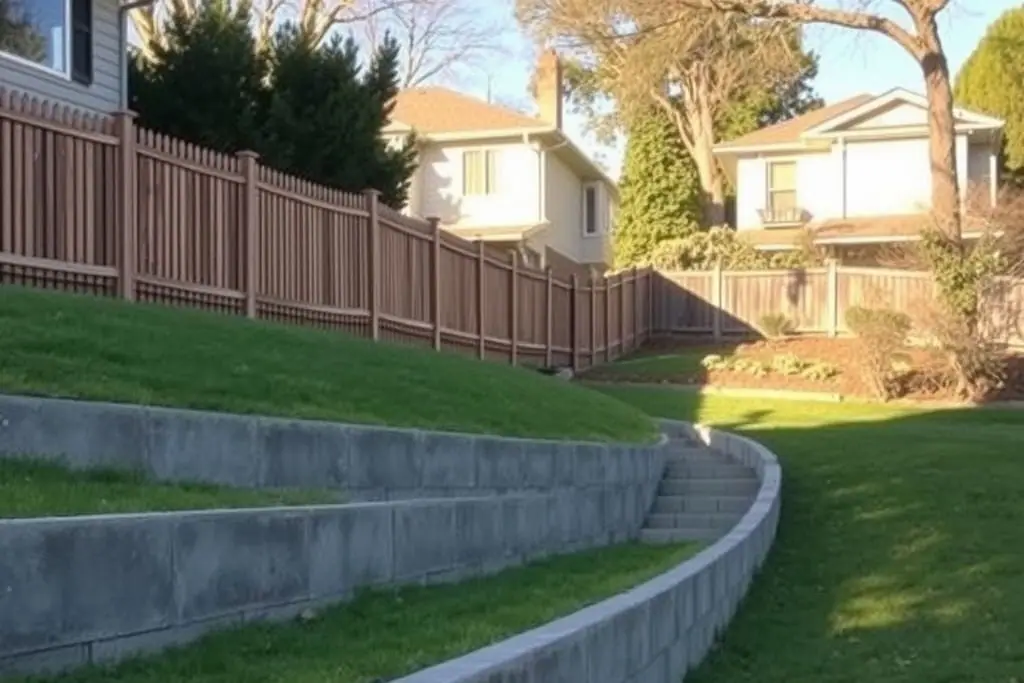
The factors that usually matter
| Question | Why it matters |
|---|---|
| Who built the wall, and when? | The builder (or the owner who had it built) often carries responsibility for how it was designed and maintained. |
| Which property does it hold up? | A wall that retains the upper lot’s soil mainly benefits the upper owner. |
| Who changed the grade? | An owner who cut into a slope or added fill created the need for the wall. |
| Where does the water come from? | Drainage directed at the wall, from either side, can shift responsibility for damage. |
| Where is the property line? | A survey answers whether the wall sits on one lot or straddles the line. |
| Is there an agreement, easement or HOA rule? | Written agreements and CC&Rs can override the default answers. |
What Civil Code § 841 says, and doesn’t
Section 841 says adjoining landowners share equally in maintaining “the boundaries and monuments between them,” and presumes they share the reasonable cost of building, maintaining or replacing a fence dividing their properties unless they’ve agreed otherwise in writing (Civil Code § 841). The statute doesn’t use the words “retaining wall.” A wall that holds up one neighbor’s yard is doing a different job than a fence, which is why the factors above usually decide responsibility.
Practical next steps
Document
Dated photos of the wall, cracks, lean, and the ground above and below. Note changes after rain.
Talk to your neighbor
In writing, calmly. Share what you’ve seen and suggest getting the wall looked at.
Get the facts on the wall
An engineer’s assessment of what’s wrong and what it will take; a survey if the line is unclear.
Get quotes
A contractor can price repair vs. replacement so you’re negotiating over real numbers.
Get legal advice
If you can’t agree, a real estate attorney can explain your options.
If a new or replacement wall is part of the answer, check permit rules for your city before anyone builds.
Common questions
Does my neighbor have to pay half of a retaining wall?
Not automatically. Civil Code § 841 presumes neighbors share the cost of a boundary fence; it doesn’t mention retaining walls. Who pays usually depends on who built the wall, which property it holds up, and who changed the grade. A real estate attorney can tell you how that applies to your lot.
My neighbor’s retaining wall is leaning into my yard. What should I do?
Document it with dated photos, tell the neighbor in writing, and if the wall supports a driveway, house or slope, get an engineer’s assessment. Keep people away from the base. If you can’t agree on next steps, talk to an attorney.
Sources
Checked October 2026. Rules and prices change; confirm with the agency or a contractor before you build.