Side-by-side comparison
| Material | Cost / sq ft of face | Lifespan | Look | Engineering notes | Best use |
|---|---|---|---|---|---|
| Segmental block (SRW) | $15–$40+ (HG) | 50–100 yrs (concrete, HG) | Textured modular units, easy curves | Taller walls need geogrid into the backfill | Terraces, garden walls, curved beds |
| Reinforced CMU | $15–$40+ (HG, block) | 50–100 yrs (concrete, HG) | Smooth, stucco or stone veneer | Grouted and reinforced on a footing | Property lines, fence on top, tight lots |
| Poured concrete | $45–$75+ (Angi SF) | 50–100 yrs (HG) | Smooth or board-formed | Reinforced stem and footing, engineered | Driveways, tall and surcharged walls |
| Timber | $20–$45+ (Angi SF) | 10–40 yrs (HG) | Rustic | Posts and deadmen; rot at soil contact | Low garden walls, short-term |
| Boulder / stone | $30–$150+ (Angi SF) | 50–200 yrs (stone, HG) | Natural | Heavy-equipment access; tall walls engineered | Naturalistic slopes |
| Gabion | $15–$60+ (Angi SF) | Not listed in sources | Modern, stone in wire baskets | Free-draining; needs a level base | Contemporary landscapes, erosion |
What’s behind each face
The face is the part you see; the part that keeps a wall standing is behind it. Every type below has drain rock and a pipe; taller block walls add geogrid, concrete walls a heel under the soil, timber walls deadmen tied back into the slope.
Segmental block
Poured concrete
Boulder
Timber
Gabion
Hillside vs. flat yard
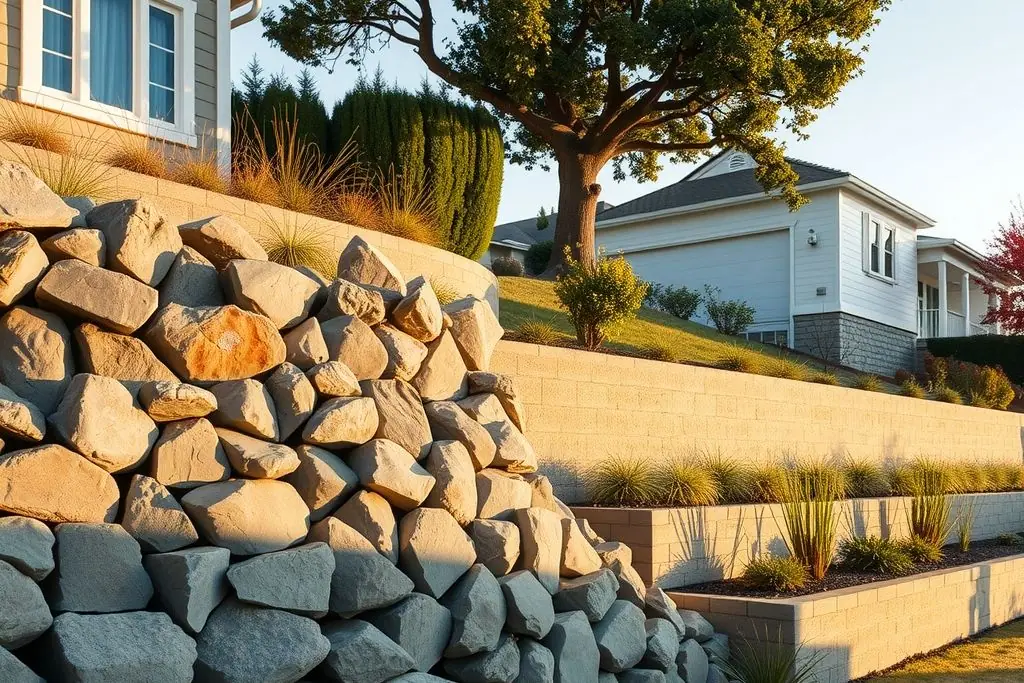
On a steep lot, the deciding factors are load and access. Poured concrete, reinforced CMU and geogrid-reinforced block handle surcharge from slopes and driveways; boulders need machine access that many hillside yards don’t have. See hillside and tiered walls.
On a flatter yard, a low segmental block or stone wall is usually the simplest, and looks are a fair tiebreaker.
Replacing a timber wall
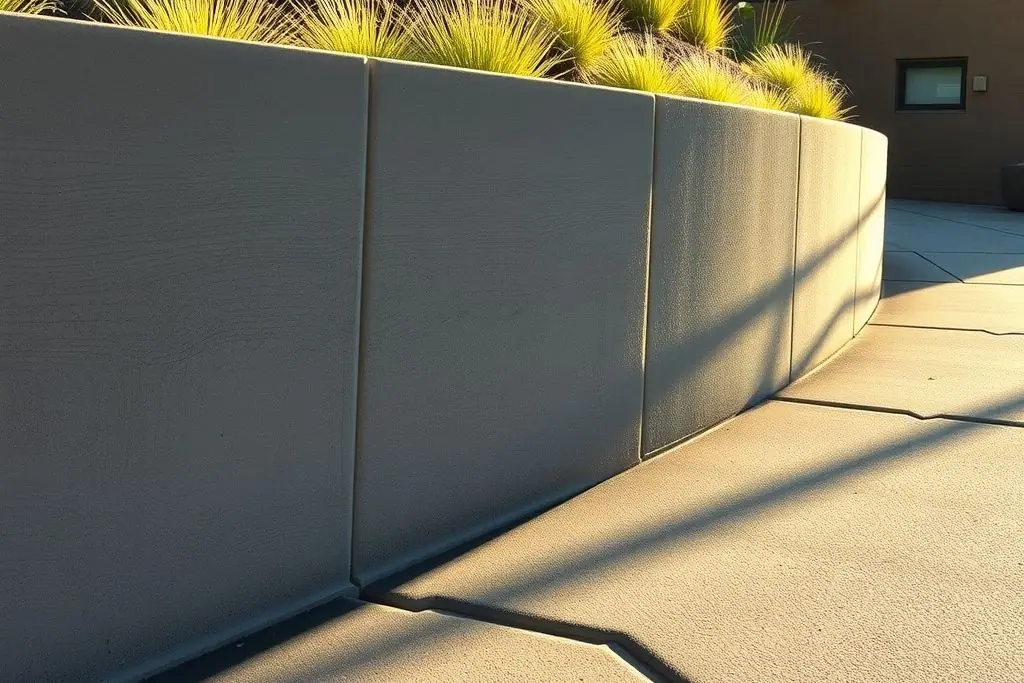
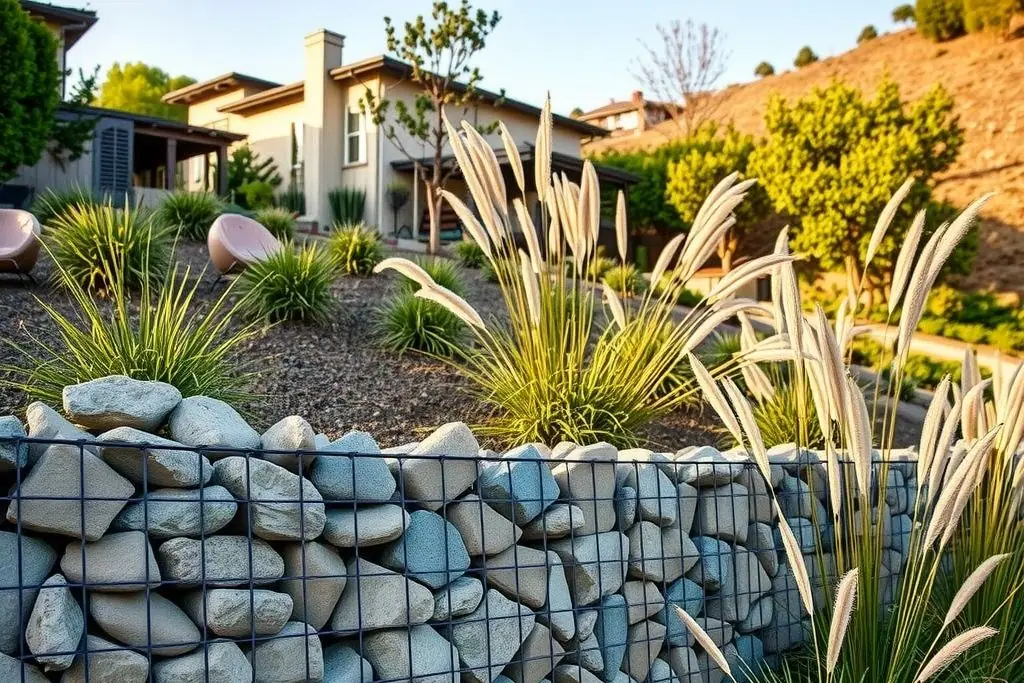
Timber walls fail at the soil line, often after a couple of decades. When replacing one, plan for removal ($30–$45+ per linear foot in Angi’s San Francisco data), new drainage, and a material that will outlast the old wall. If the old wall is leaning, start with repair vs. replacement.
Permits don’t depend on material
Permit triggers are about height and load. Walnut Creek measures from the bottom of the footing (4 ft); the County from the top of the footing (3 ft); Danville by retained soil (3 ft). Details on permits by city; prices in the cost guide.
Common questions
What is the cheapest retaining wall option?
Timber usually has the lowest price per square foot ($20–$45+ in Angi’s San Francisco data) but also the shortest life, about 10–40 years per HomeGuide. Segmental block ($15–$40+ per HomeGuide) is often the best value over the wall’s life for low and mid-height walls.
Which retaining wall lasts longest?
HomeGuide lists concrete walls at 50–100 years and stone at 50–200 years, against 10–40 for wood. Drainage matters as much as material: an undrained concrete wall can fail early.
Does the material change whether I need a permit?
No. Permit triggers are based on height, how height is measured, and surcharge, not on whether the wall is block, concrete or stone.
Sources
- HomeGuide: Retaining wall cost (2026)
- Angi: Retaining wall cost in San Francisco (updated Feb 2026)
- City of Walnut Creek: Retaining walls
- Contra Costa County: Retaining walls (PDF)
- Town of Danville: Retaining wall permit
Checked October 2026. Rules and prices change; confirm with the agency or a contractor before you build.